

 |
|
||||
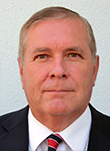
BiographySiegfried Selberherr was born in Klosterneuburg, Austria, in 1955. He received the degree of Diplomingenieur in electrical engineering and the doctoral degree in technical sciences from the Technische Universität Wien in 1978 and 1981, respectively. Prof. Selberherr has been holding the venia docendi on Computer-Aided Design since 1984. From 1988 to 1999 he was the Head of the Institute for Microelectronics. From 1998 to 2005 he served as Dean of the Faculty of Electrical Engineering and Information Technology. His current research topics are modeling and simulation of problems for microelectronics engineering. |
|||||

Preface
Welcome to the 37th annual research review of the Institute for Microelectronics! Our permanent staff members, funded by the Austrian Federal Ministry of Education, Science, and Research, have changed since last year and now consist of nineteen full-time employees: six professors, four senior scientists, one administrative manager, one full-time secretary, one part-time secretary, four full-time technical assistants, and three apprentices. Additionally, twenty-seven scientists, eight postdoctoral researchers, and one part-time project assistant are currently funded through projects supported by our industrial partners, the Austrian Science Fund (FWF), the Austrian Research Promotion Agency (FFG), the Christian Doppler Research Society (CDG), and the European Commission (EC). Over the last year, one FWF project, “Numerical Constraints for the Wigner and the Sigma Equation” successfully ended. The ERC project on "Fluorides for 2D Next-Generation Nanoelectronics", the H2020 Project "European Master For High Performance Computing," the three CDG laboratories on "Nonvolatile Magnetoresistive Memory and Logic," "Multi-Scale Process Modeling of Semiconductor Devices and Sensors," and "Single-Defect Spectroscopy in Semiconductor Devices," two projects funded by the FFG ("First- principle simulation of material properties enabling high-performance infrared detectors and emitters" and "Nanoelectronic Device Simulation"), as well as three projects funded by the FWF ("Adsorbate-Dependent Conductivity of MoS2 FETs" and "Semiconductor/fluoride structures on Si for 2D electronics" are progressing according to plan. We are very pleased that our industrial partners have continued and extended their support for projects dealing with a wide range of topics, such as device degradation and recovery for circuit simulation, defect spectroscopy of integrated photo diodes, reliability at cryogenic temperatures, fundamental fluctuations in spintronics, noise in semiconductor devices, 2D semiconductors obtained by surface rubbing on various insulator substrates for next-generation electronics, insulators for 2D nanoelectronics, multidisciplinary characterization and modeling for innovative process and product integration of power semiconductors, as well as reliability of oxides in SiC MOSFETs. It is a great pleasure for us to report that seven directly funded projects on molecular dynamics modeling of wide bandgap semiconductor fabrication, suitability of conventional ALD oxides for high-performance 2D transistors with sub-nm EOT, quantum mechanical device simulation, gate stack diode model considering charge trapping effects, optimization of low-frequency noise of integrated circuits fabricated using the 22FDX platform, and trustworthy electronics started during the past year. We are exceptionally proud of our institute's consistently high academic and scientific output, as evidenced by our large number of long-term projects and our high rate of publications — particularly in relation to our contributions to and participation in leading international conferences. However, we recognize that this success would not have been possible without the ongoing support of our collaborators in academia and industry. Therefore, we wish to express our sincere gratitude for their trust in our scientific endeavors. As we embark on the following year, we maintain high expectations and look forward to continued progress and achievement.