


Next: 3 The Sink/Source Term
Up: 4 Prediction of the
Previous: 1 Korhonen's Model
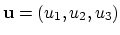
Korhonen's equation can be analytically solved for different cases of initial and boundary
conditions [51,7,80,83], however from the practical point of view, the most important solution is for the situation where the vacancy flux is blocked at the both ends of a finite line, i.e.
 |
(232) |
on the segment ![$ [-l,0]$](img790.png) , assuming the initial vacancy concentration to be
, assuming the initial vacancy concentration to be
 .
In this case, the solution of (4.21) is given in [83] as,
.
In this case, the solution of (4.21) is given in [83] as,
 exp exp |
(233) |
where,
 |
(234) |
is the steady-state solution and,
![$\displaystyle A_n=\frac{16n\pi[1-(-1)^n\text{exp}(\alpha/2)]}{(\alpha^2+4n^2\pi^2)^2}\Bigl(\text{sin}(n\pi\xi)+\frac{2n\pi}{\alpha}\text{cos}(n\pi\xi)\Bigr),$](img795.png) |
(235) |
 |
(236) |
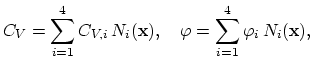
For the sake of simplicity, in the equations (4.23)-(4.26) we used the substitutions,
 |
(237) |
For  in Figure 4.2 and Figure 4.3 the distribution of the normalized vacancy concentration
  and the reduced hydrostatic pressure,
 |
(238) |
are presented for different electromigration stressing times.
The stress build-up continues until the electromigration driving force is counter-balanced by intrinsic stress in the line.
That is the case in Figure 4.3 for  where the stress profile is a straight line.
The condition for the stress-electromigration equilibrium is,
where the stress profile is a straight line.
The condition for the stress-electromigration equilibrium is,
 |
(239) |
Equation (4.29) is discussed in more detail in [48].
If for the given operating conditions the stress-electromigration equilibrium is reached before a critical stress threshold is build, no damage is produced and the interconnect is virtually ``immortal'' [48,49,47].
Next: 3 The Sink/Source Term
Up: 4 Prediction of the
Previous: 1 Korhonen's Model
J. Cervenka: Three-Dimensional Mesh Generation for Device and Process Simulation
 (dashed line),
 (points),