


After an order parameter was evaluated on the
 a
grid needs to be adapted according to the new void-metal interface
position.
Therefore it is necessary to extract all elements which are cut by
the void-metal interface in grid
.
The following
condition is used: We take a triangle
a
grid needs to be adapted according to the new void-metal interface
position.
Therefore it is necessary to extract all elements which are cut by
the void-metal interface in grid
.
The following
condition is used: We take a triangle
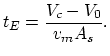 and denote its vertices as
 . The triangle
  belongs to the interfacial
elements if for the values of the order parameter
belongs to the interfacial
elements if for the values of the order parameter  at the triangle's
vertices holds
at the triangle's
vertices holds
 or
or
 . We assume that an interface intersects each edge of the element only once.
The set of all interfacial elements at the time
. We assume that an interface intersects each edge of the element only once.
The set of all interfacial elements at the time  is denoted as
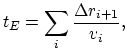 . The centers of gravity of each triangle from the build the interface point list
  .
The distance of the arbitrary point
.
The distance of the arbitrary point  from is defined as,
 |
(271) |
is now
completed with respect to  as defined in the next section.
