is a triangulation of the area
  at discrete time
  , and
, and
 are discrete nodal values of the order parameter on this triangulation.
A finite element based iteration for solving (4.50)
on grid
and evaluating the order parameter at the
time
are discrete nodal values of the order parameter on this triangulation.
A finite element based iteration for solving (4.50)
on grid
and evaluating the order parameter at the
time
 consists of two steps [88]:
Step 1. For the  iteration of the
  time step
the linear system of equations has to be solved:
time step
the linear system of equations has to be solved:
 |
(266) |
 |
(267) |
 of the nodal values
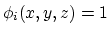 of the
triangulation
.
of the
triangulation
. ![$ [M]_{ij}$](img908.png) and
and ![$ [K]_{ij}$](img909.png) are the lumped mass
and stiffness matrix, respectively and
are the lumped mass
and stiffness matrix, respectively and
 .
.
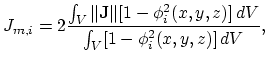
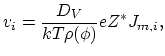 are projected on
 ![$ [-1, 1]$](img912.png) by a function
by a function
 |
(269) |