The preceding analysis established IEC as a versatile design parameter whose role depends on the device architecture: a modifier of sequential switching, a guarantor of RL stability, and a controller of PL alignment. This section
advances to structures that combine these roles: SAF-enhanced hybrid FLs with metallic spacers, systematic torque decomposition, and ds-MTJ structures with dual reference layers [216, 217, 218].
7.6.1 SAF Architecture and Operating Principle
A SAF couples two ferromagnetic layers anti-parallel through RKKY exchange via a metallic spacer (Section 6.4), providing stray-field cancellation, enhanced
stability through the AFM coupling energy barrier, and external field immunity.
The material and geometry parameters for all three configurations are given in Table 7.4. Figure 7.28 compares the switching dynamics across the three configurations. All three share the SAF reference structure of Stack C (Figure 7.22 (c)): a CoPt HL AFM-coupled to a CoFeB RL through Ru at \(J_{\text {iec}} \approx \SI {-1.32}{\milli \joule \per \meter \squared
}\) [207], with a PL FM-coupled to the RL through Ta at \(J_{\text {iec}} \approx \SI {+0.8}{\milli \joule \per \meter \squared }\) [213]. Stack C employs a single FL, serving as the
reference.
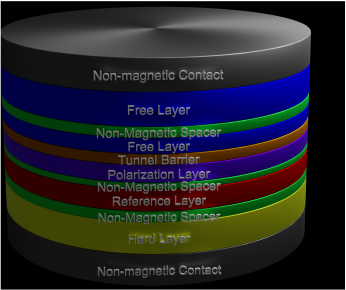
Figure 7.27: Layer stack of the SAF-enhanced composite FL configuration from [216]. Stack D and Stack E share the same architecture, differing only in the NMS material between the FL segments: tungsten
(W, \(\lambda _{sf} = \SI {2.4}{\nano \meter }\)) for Stack D, tantalum (Ta, \(\lambda _{sf} = \SI {1.9}{\nano \meter }\)) for Stack E. IEC acts at the HL–RL interface (through Ru, AFM coupling) and
at the FL\(_1\)–FL\(_2\) interface (through the metallic spacer, FM coupling). Stack C employs a single FL (same architecture as Figure 7.22 (c)).
Figure 7.28: Switching duration with different FM coupling for three stack configurations: (a) Stack C with single FL at strong (\(\SI {0.8}{\milli \joule \per \meter \squared }\)) and weak (\(\SI
{0.2}{\milli \joule \per \meter \squared }\)) FM coupling, (b) Stack D with W spacer composite FL at \(J_{\text {iec}} = \SI {0.37}{\milli \joule \per \meter \squared }\) and \(\SI {0.8}{\milli
\joule \per \meter \squared }\), and (c) Stack E with Ta spacer composite FL at \(J_{\text {iec}} = \SI {0.2}{\milli \joule \per \meter \squared }\) and \(\SI {0.8}{\milli \joule \per \meter
\squared }\). Weaker coupling delays switching in all three configurations, with the Ta spacer (c) exhibiting the longest switching times [216].
Stack D and Stack E replace the single FL with a composite FL (Figure 7.27), differing in the NMS material between the FL
segments: W for Stack D with FM coupling of 0.37mJ/m2 [192], and Ta for Stack E with 0.2mJ/m2 [195, 214].
7.6.2 Reliability Requirements: The Critical Role of Coupling Strength
The reliability of SAF-enhanced structures depends critically on the IEC strength at each interface (Table 7.4). If the coupling is too weak, the reference structure
can become unstable during FL switching, leading to device failure.
The simulations reveal two distinct reliability regimes [215] (Figures 7.25 and 7.26). With strong
coupling (\(|J_{\text {iec}}| > \SI {1}{\milli \joule \per \meter \squared }\)), the RL remains rigidly coupled to the hard layer throughout FL switching. The IEC effective field dominates over parasitic torques
and stray fields, producing symmetric P\(\to \)AP and AP\(\to \)P behavior with no instability. With weak coupling (\(|J_{\text {iec}}| < \SI {0.5}{\milli \joule \per \meter \squared }\)), the parasitic
spin-torque on the RL overcomes the IEC field and initiates RL reversal, leading to (1) TMR collapse when the RL aligns parallel to the FL in both states, (2) asymmetric switching with one direction showing
instability, and (3) permanent reference corruption in severe cases.
The three-dimensional visualizations confirm this contrast: in Stack B (Figure 7.25), strong AFM coupling maintains uniform RL magnetization throughout FL
switching, while weak coupling produces RL domain formation and a corrupted final state. In Stack C (Figure 7.26), the analogous failure mode involves PL
reversal when the RL–PL FM coupling is insufficient, producing a write failure indistinguishable from the initial P state by resistance measurement.
7.6.3 Spin-Torque Analysis and IEC Design Criterion
The spin-torque distribution across the full multilayer stack [216] reveals parasitic torques on the reference structure during FL switching: the spin current traverses the entire stack with absorption at every ferromagnetic
interface, generating significant torque on the RL and PL. When the RL–PL coupling is insufficient, the PL is the most vulnerable element due to lower anisotropy and weaker FM coupling through Ta. In this case, PL reversal
disrupts spin injection and causes write errors. The comparison between W and Ta NMS materials shows that W provides larger torques due to its longer spin-flip length (2.4nm vs. 1.9nm) [219]. A detailed spacer material comparison is provided in the hybrid FL analysis
(Section 7.6.4).
The IEC must exceed the maximum parasitic torque on the reference structure under worst-case switching conditions:
where \(|\mathbf {T}_{RL/PL}|_{\text {max}}\) is the maximum torque on the RL or PL during switching, and \(t_{RL/PL}\) is the layer thickness. For typical parameters, this requirement yields \(|J_{\text {iec}}| >
\SI {1}{\milli \joule \per \meter \squared }\), consistent with the empirical observations from the switching simulations.
7.6.4 Hybrid FL with Metallic Spacers
The hybrid FL replaces the MgO TB between FL segments with a metallic NMS (W or Ta, thickness 0.3nm), preserving the composite
architecture (FL\(_1\) = 0.8nm, NMS, FL\(_2\) = 3.5nm) while adding a direct metallic path for spin transport between the segments. The three stack configurations from Section 7.6.1
single FL (Stack C), W spacer composite (Stack D), and Ta spacer composite (Stack E) are now investigated with a 70nm
device diameter at a 2V bias.
W (\(\lambda _{sf} = \SI {2.4}{\nano \meter }\)) transmits more spin current than Ta (\(\lambda _{sf} = \SI {1.9}{\nano \meter }\)) [219], producing stronger IEC-induced effective fields and faster switching.
At weak FM coupling (0.37mJ/m2 for W [192], 0.2mJ/m2 for Ta [195, 214]), both spacers enable sequential switching of FL\(_1\) and FL\(_2\) but with distinct dynamics visible in the three-dimensional magnetization
states. At the stronger coupling of 0.8mJ/m2 [213, 220], the rigid alignment between FL\(_1\) and FL\(_2\) forces
a more synchronized reversal but at reduced switching speed. Figure 7.28 confirms that weaker coupling systematically delays switching across all three
configurations, with the Ta spacer (Stack E) exhibiting the longest switching times due to its shorter spin-flip length attenuating the inter-segment coupling.
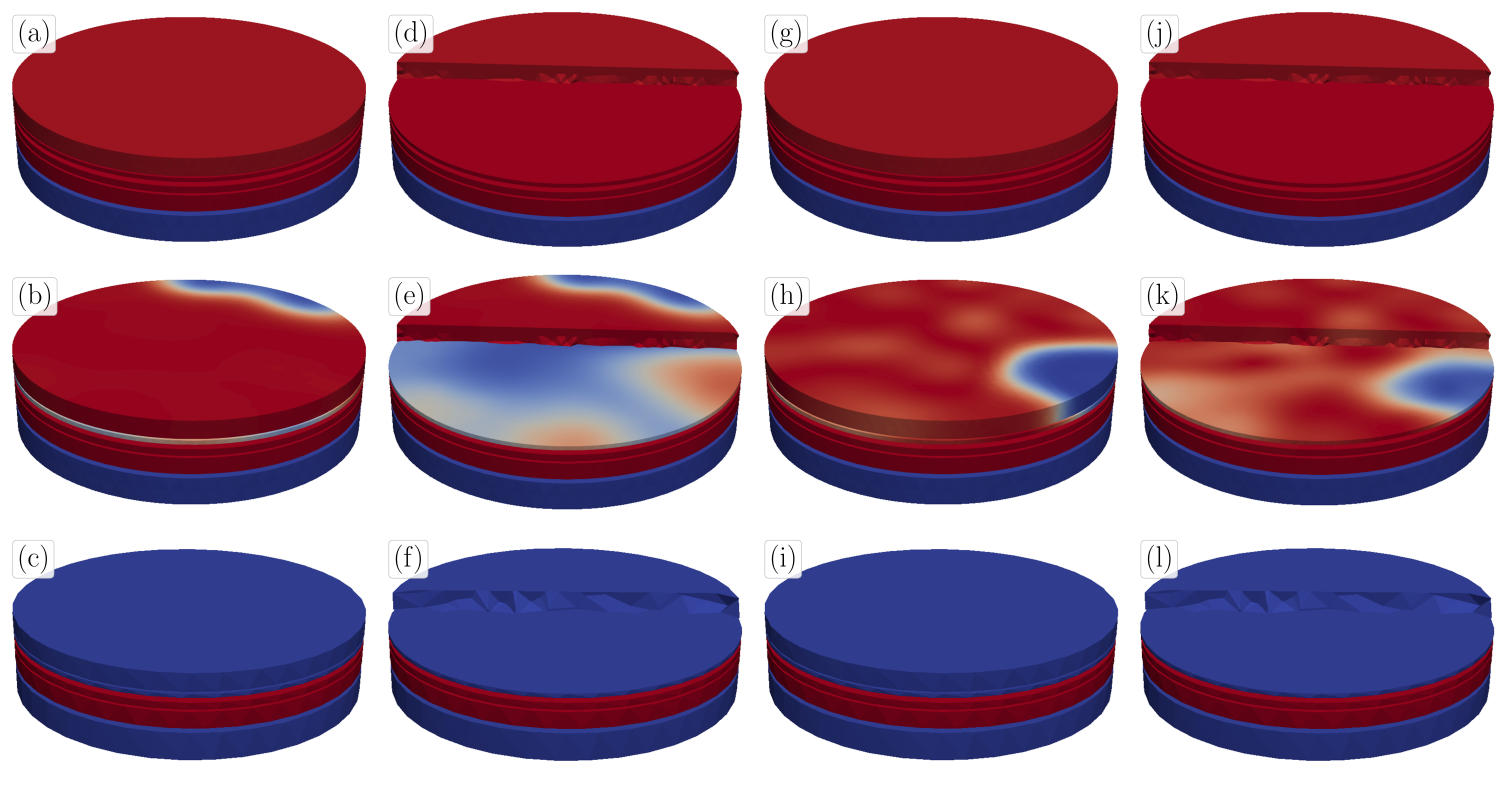
Figure 7.29: Three-dimensional magnetization states during P\(\to \)AP switching in Stack D (W spacer composite FL), contrasting weak (\(J_{\text {iec}} = \SI {0.37}{\milli \joule \per \meter \squared
}\)) and strong (\(J_{\text {iec}} = \SI {0.8}{\milli \joule \per \meter \squared }\)) FM FL\(_1\)–FL\(_2\) coupling. (a)–(c) weak coupling, full view and (d)–(f) weak coupling, FL\(_2\) clipped to
reveal FL\(_1\), (g)–(i) strong coupling, full view and (j)–(l) strong coupling, FL\(_2\) clipped to reveal FL\(_1\). Rows show the initial state, mid-switching (\({\sim }\SI {0.5}{\nano \second }\)), and final
state (\({\sim }\SI {1.7}{\nano \second }\)). With weak coupling, FL\(_1\) reverses first producing a transient plateau at \(\langle m_x \rangle \approx 0.5\), with strong coupling, synchronized reversal eliminates the
plateau [216].
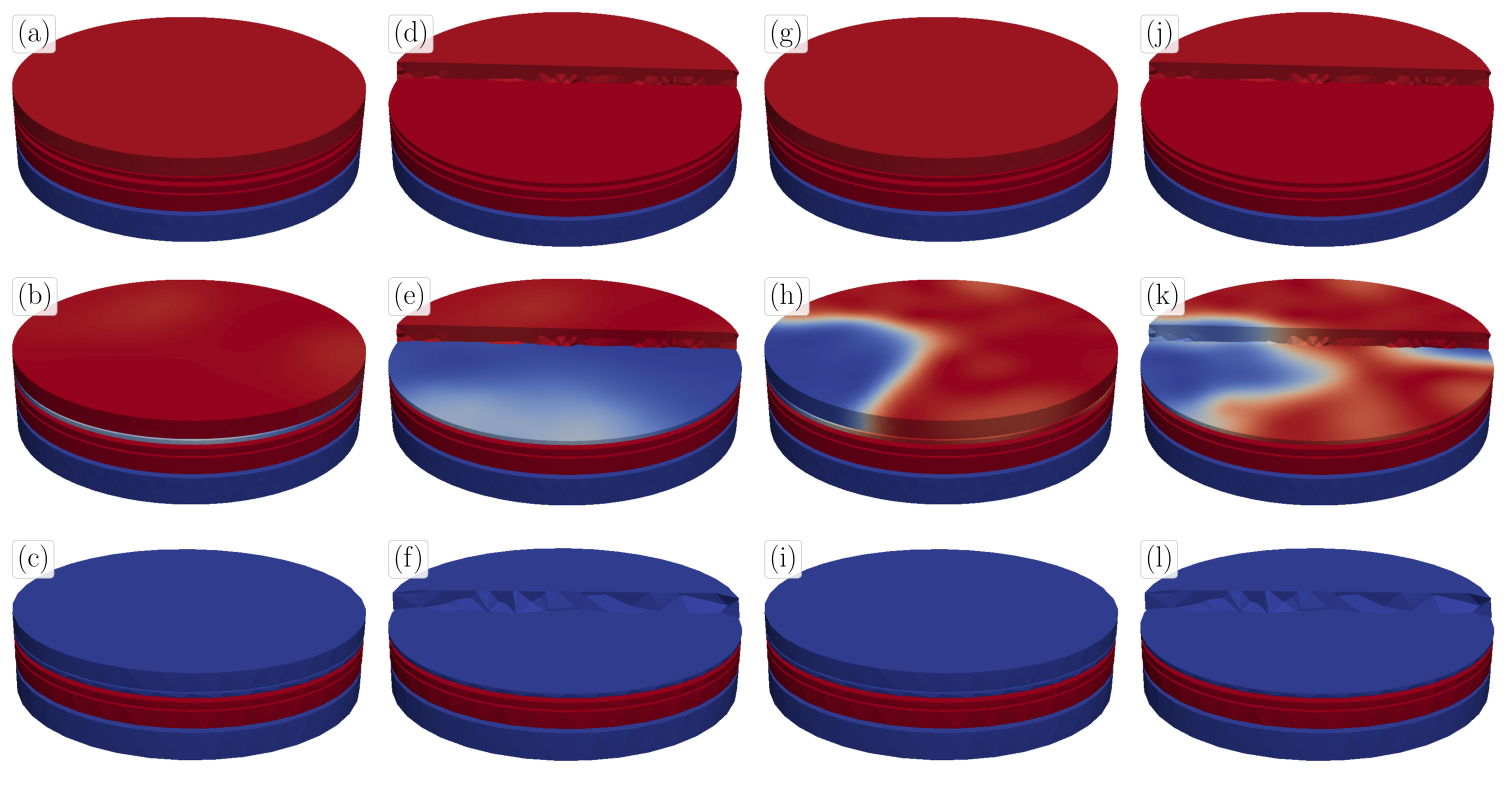
Figure 7.30: Three-dimensional magnetization states during P\(\to \)AP switching in Stack E (Ta spacer composite FL), contrasting weak (\(J_{\text {iec}} = \SI {0.2}{\milli \joule \per \meter \squared
}\)) and strong (\(J_{\text {iec}} = \SI {0.8}{\milli \joule \per \meter \squared }\)) FM FL\(_1\)–FL\(_2\) coupling. (a)–(c) weak coupling, full view and (d)–(f) weak coupling, FL\(_2\) clipped to
reveal FL\(_1\), (g)–(i) strong coupling, full view and (j)–(l) strong coupling, FL\(_2\) clipped to reveal FL\(_1\). Rows show the initial state, mid-switching (\({\sim }\SI {0.75}{\nano \second }\)), and final
state (\({\sim }\SI {1.7}{\nano \second }\)). The shorter spin-flip length of Ta (\(\SI {1.9}{\nano \meter }\)) compared to W (\(\SI {2.4}{\nano \meter }\)) produces weaker inter-segment torques, eliminating the
transient plateau and slowing overall switching [216].
The three-dimensional magnetization states visualize the effect of coupling strength on switching dynamics across all three configurations. In the single-FL baseline (Figure 7.28 (a)), weak RL–PL coupling allows PL reversal during FL switching, while strong coupling maintains PL stability. In the composite FL stacks, both the W
spacer (Figure 7.29 (a)–(f)) and Ta spacer (Figure 7.30 (a)–(f)) exhibit sequential
FL\(_1\)/FL\(_2\) reversal under weak coupling, while strong coupling (Figure 7.29 (g)–(l), Figure 7.30 (g)–(l)) forces synchronized reversal. The sequential switching arises because the dominant spin-transfer torque is concentrated at the PL\(|\)TB and
TB\(|\)FL\(_1\) interfaces, while the torque at the metallic NMS is negligible: FL\(_1\) therefore reaches its critical switching threshold first. Once FL\(_1\) reverses, the resulting FL\(_1\)–FL\(_2\) misalignment increases the
IEC effective field, which, combined with spin-accumulation from the reversed FL\(_1\), drives FL\(_2\) to complete the transition. With the W spacer, this two-step process produces a transient plateau at \(\langle m_x
\rangle \approx 0.5\) visible in the switching trajectory (Figure 7.28 (b)) and the mid-switching snapshots (Figure 7.29 (b),(e)). The Ta spacer’s shorter spin-flip length suppresses this plateau (Figure 7.30 (b),(e)).
Strong coupling forces synchronized reversal at reduced speed.
7.6.5 Four-Stage Torque Decomposition
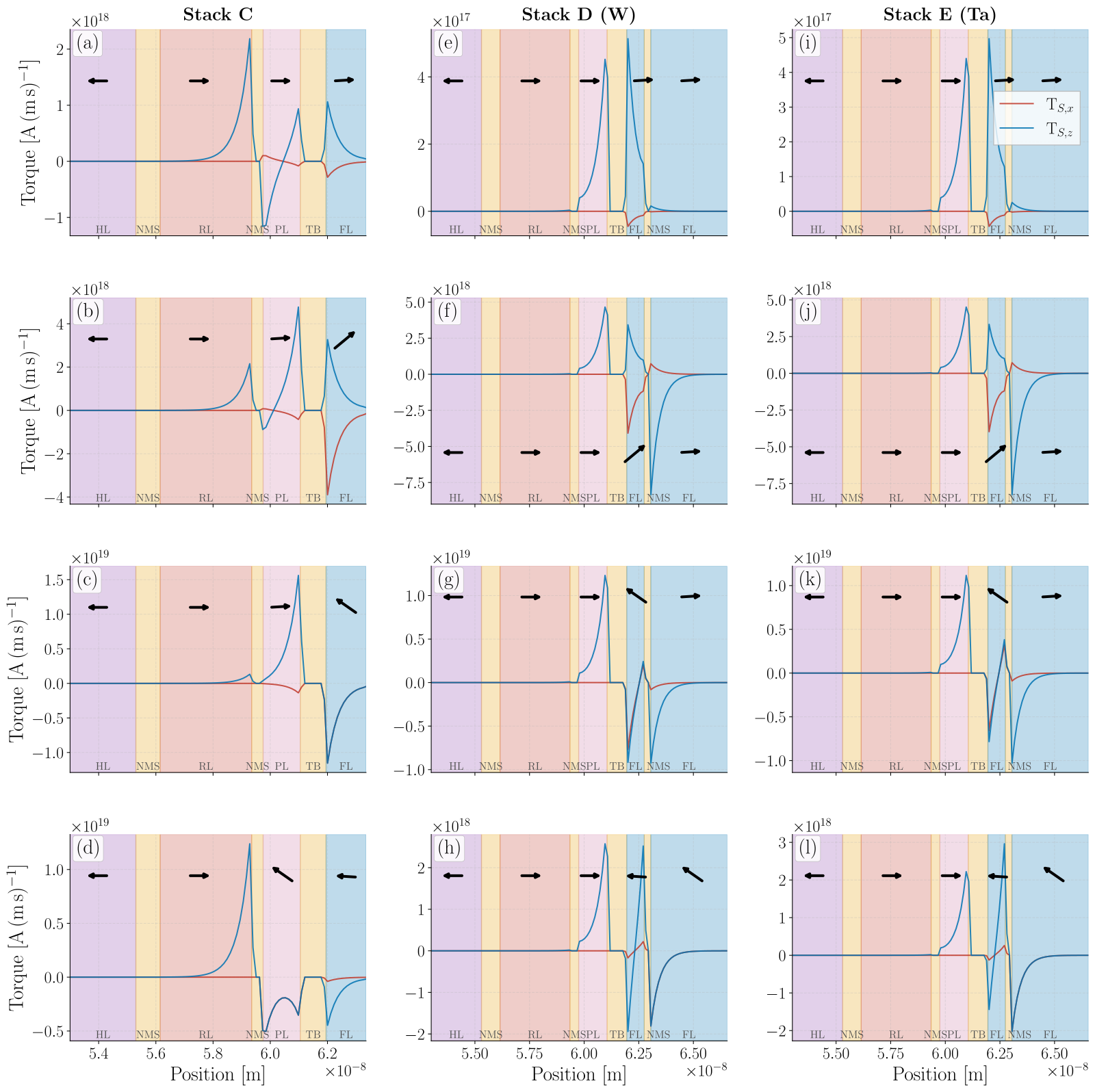
To understand how the metallic spacer affects switching dynamics, the P\(\to \)AP reversal is decomposed into four characteristic stages defined by the FL magnetization angle \(\theta \) relative to the initial P state.
Figure 7.31 presents the spin-transfer torque distribution across the full stack for all three configurations at each stage.
At the initial P state (\(\theta \approx 0^\circ \), Figure 7.31 (a)–(c)), torques concentrate at the PL\(|\)TB and TB\(|\)FL interfaces, with all three
stacks exhibiting similar distributions because the FL magnetization remains aligned. At \(\theta = 45^\circ \) ((d)–(f)), the field-like torque \(T_{S,x}\) increases significantly, driving the magnetization toward the transverse
plane, critically, the composite FL stacks ((e),(f)) develop additional torque peaks at the NMS interfaces that are absent in the single-FL configuration ((d)). At \(\theta = 135^\circ \) ((g)–(i)), torques increase by an order of
magnitude compared to Stage 1: the damping-like torque \(T_{S,z}\) dominates and completes the FL reversal. At the same time, the PL becomes destabilized by parasitic torques. The W spacer ((h)) generates
systematically larger torques than the Ta spacer ((i)) due to its longer spin-flip length (2.4nm vs. 1.9nm). At the final AP state (\(\theta \approx 180^\circ \), (j)–(l)), residual torques persist as the system equilibrates. Notably, the PL
experiences significant residual torque that must be counteracted by the SAF coupling to prevent reversal.
The composite FL thus introduces additional torque injection points at NMS interfaces, with W generating systematically larger torques than Ta across all four stages, quantifying the mechanism behind the faster switching in
Figure 7.28 (b).
Figure 7.31: Four-stage torque decomposition during P\(\to \)AP switching for (a)–(d) Stack C with single FL, (e)–(h) Stack D with W spacer composite FL, and (i)–(l) Stack E with
Ta spacer composite FL. Rows show the spin-transfer torque distribution at the initial P state (\(\theta \approx 0^\circ \)), \(\theta = 45^\circ \), \(\theta = 135^\circ \), and the final AP state (\(\theta \approx
180^\circ \)). The composite FL stacks show additional torque peaks at the NMS interfaces absent in the single-FL configuration [216].
7.6.6 Write Efficiency Analysis
The practical relevance of IEC engineering depends on whether optimizing switching speed compromises data retention. Write efficiency, defined as the ratio of thermal stability to critical switching current:
captures this fundamental tradeoff. To anchor this metric, the macrospin critical current [31] for the 70nm single-FL Stack C yields
\(I_{c0} \approx \SI {585}{\micro \ampere }\) (critical current density \(J_{c0} \approx \SI {15}{\mega \ampere \per \centi \meter \squared }\), within the 1MA/cm2 to 20MA/cm2 range reported for CoFeB\(|\)MgO
pMTJs [185, 187]), with a thermal stability factor \(\Delta \approx 600\) that far exceeds the retention requirement. The 2V
bias used in the simulations corresponds to approximately \(2\,I_{c0}\), consistent with standard overdrive conditions. For symmetric composite FL layers (FL\(_1\) = FL\(_2\) thickness), the IEC contributions to both the
energy barrier \(\mathcal {E}_{\mathrm {B}}\) and the critical current \(I_{c0}\) cancel, rendering write efficiency weakly sensitive to coupling strength IEC adds the same energy to both the parallel and anti-parallel states.
For the asymmetric configuration studied here (FL\(_2\) = 3.5nm, FL\(_1\) = 0.8nm), incomplete cancellation means IEC modestly affects \(\eta _{\text {write}}\): weaker coupling reduces \(I_{c0}\) more than \(\mathcal {E}_{\mathrm {B}}\), yielding a slight efficiency
gain. The practical implication is that the designer can optimize IEC for switching speed via the spin-torque redistribution mechanism identified in the preceding subsection without significantly compromising write efficiency,
effectively decoupling two otherwise conflicting design objectives [216].
While the hybrid FL analysis established IEC and spacer material as parameters governing switching speed and write efficiency, a complementary approach to improving switching performance is to engineer additional spin-torque
sources. The ds-MTJ architecture, investigated in parallel [218], positions a second reference layer opposite the conventional RL to generate cooperative torques that accelerate switching.
7.6.7 Device Concept and Dual Torque Mechanism
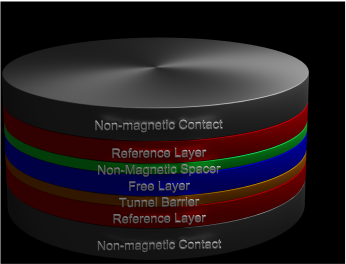
A ds-MTJ positions the FL between two reference layers with anti-parallel magnetizations (Figure 7.32): RL\(_1\) is separated from the FL by a conventional MgO
TB providing the Slonczewski STT [19], while RL\(_2\) is separated by a thin NMS providing an additional GMR-type torque [119]. Because RL\(_1\) and RL\(_2\) point in opposite directions (\(-\hat {x}\) and
\(+\hat {x}\), respectively), both torques favor the same switching direction, producing cooperative torque action that accelerates switching compared to single-RL structures [218]. The complementary contributions of a
predominantly damping-like Slonczewski torque from RL\(_1\) and a combined damping-like and field-like GMR torque from RL\(_2\) add constructively at the two FL interfaces. The GMR torque magnitude depends on the
spin-flip length \(\lambda _{sf}\) of the NMS material, with longer \(\lambda _{sf}\) allowing more spin current from RL\(_2\) to reach the FL.
Figure 7.32: Layer stack of the double spin-torque MTJ (ds-MTJ) architecture, in which the FL is sandwiched between two reference layers with anti-parallel magnetizations separated by a TB and a non-magnetic metallic spacer.
The anti-parallel RL configuration produces cooperative torques from both interfaces that constructively add, and the NMS material choice (Ru vs. Ta) controls the secondary torque magnitude via its spin-flip length [218].
(a)
(b)
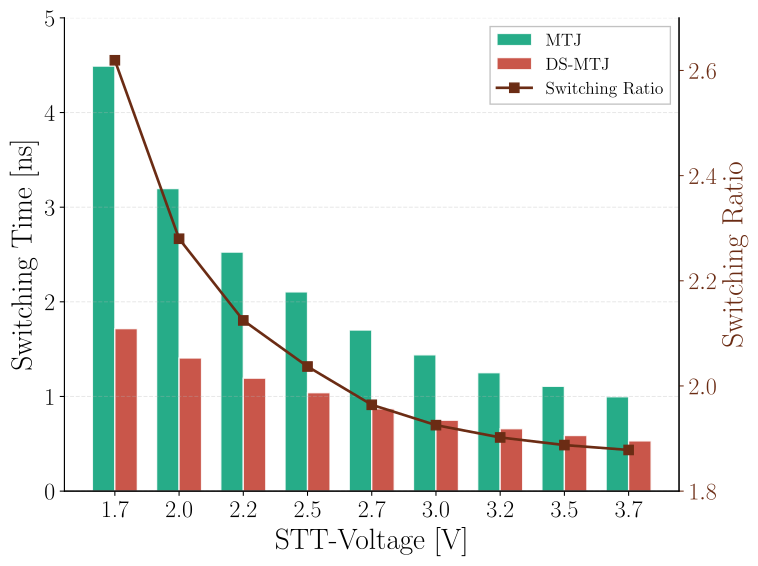
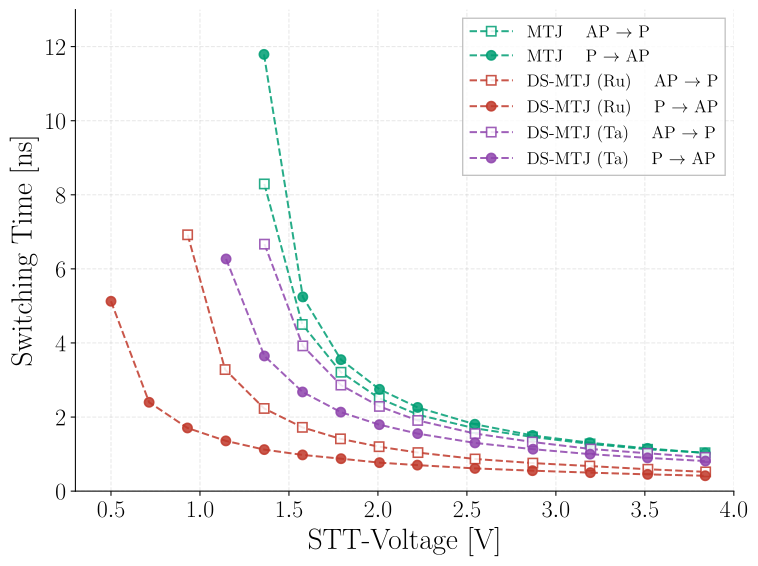
Figure 7.33: Switching performance of ds-MTJ vs. conventional pMTJ structures, showing (a) the switching time ratio and (b) absolute switching times for both transition directions. The ds-MTJ with Ru-NMS
achieves a 2–3\(\times \) speedup and sub-nanosecond switching at moderate voltages, while Ta-NMS provides a 1.2–1.5\(\times \) enhancement, consistent with the ratio of their spin-flip lengths (4nm vs. 1.9nm) [218].
Table 7.5: Layer parameters of the ds-MTJ architecture [218]. The FL is sandwiched between RL\(_1\) (MgO tunnel barrier) and RL\(_2\) (metallic spacer). Two NMS materials are compared.
.
Parameter
Ru-NMS
Ta-NMS
Cell diameter
70nm
RL\(_1\) (CoFeB) thickness
2.5nm
FL (CoFeB) thickness
1.3nm
RL\(_2\) (CoFeB) thickness
2.5nm
MgO TB thickness
0.9nm
NMS material
Ru
Ta
NMS thickness
2nm
2nm
\(\lambda _{sf}\) (NMS)
4nm
1.9nm
\(J_{\text {iec}}\) (RL\(_1\)–FL)
0 (baseline)
\(J_{\text {iec}}\) (FL–RL\(_2\))
0 (baseline)
7.6.8 Influence of Spacer Material
The NMS material determines the GMR torque magnitude [219]. The layer parameters are summarized in Table 7.5. Two commonly used spacer materials
were compared: Ru (\(\lambda _{sf} \approx \SI {4}{\nano \meter }\)), which enables efficient spin transport and strong RKKY-type IEC [108, 109, 110] tunable between FM and AFM character
via spacer thickness, and Ta (\(\lambda _{sf} \approx \SI {1.9}{\nano \meter }\)), which produces weaker GMR torques but is preferred for process integration as a standard seed/capping material in MTJ stacks.
Figure 7.33 quantifies the enhancement in switching speed. (1) The Ru-NMS ds-MTJ achieves a 2–3\(\times \) speedup over conventional single-RL pMTJ
structures across the full voltage range, reaching sub-nanosecond switching times above 2V with standard CoFeB\(|\)MgO
materials [218]. (2) The Ta-NMS variant provides a 1.2–1.5\(\times \) enhancement, consistent with the \(\sim \)2\(\times \) ratio of the Ru and Ta spin-flip lengths, confirming that the secondary torque scales
with spin current transmission efficiency through the spacer. (3) The speedup factor is larger at lower voltages, where the primary RL\(_1\) torque is marginal, and the secondary RL\(_2\) contribution becomes
proportionally more significant in determining switching success.
7.6.9 Role of Interlayer Exchange Coupling
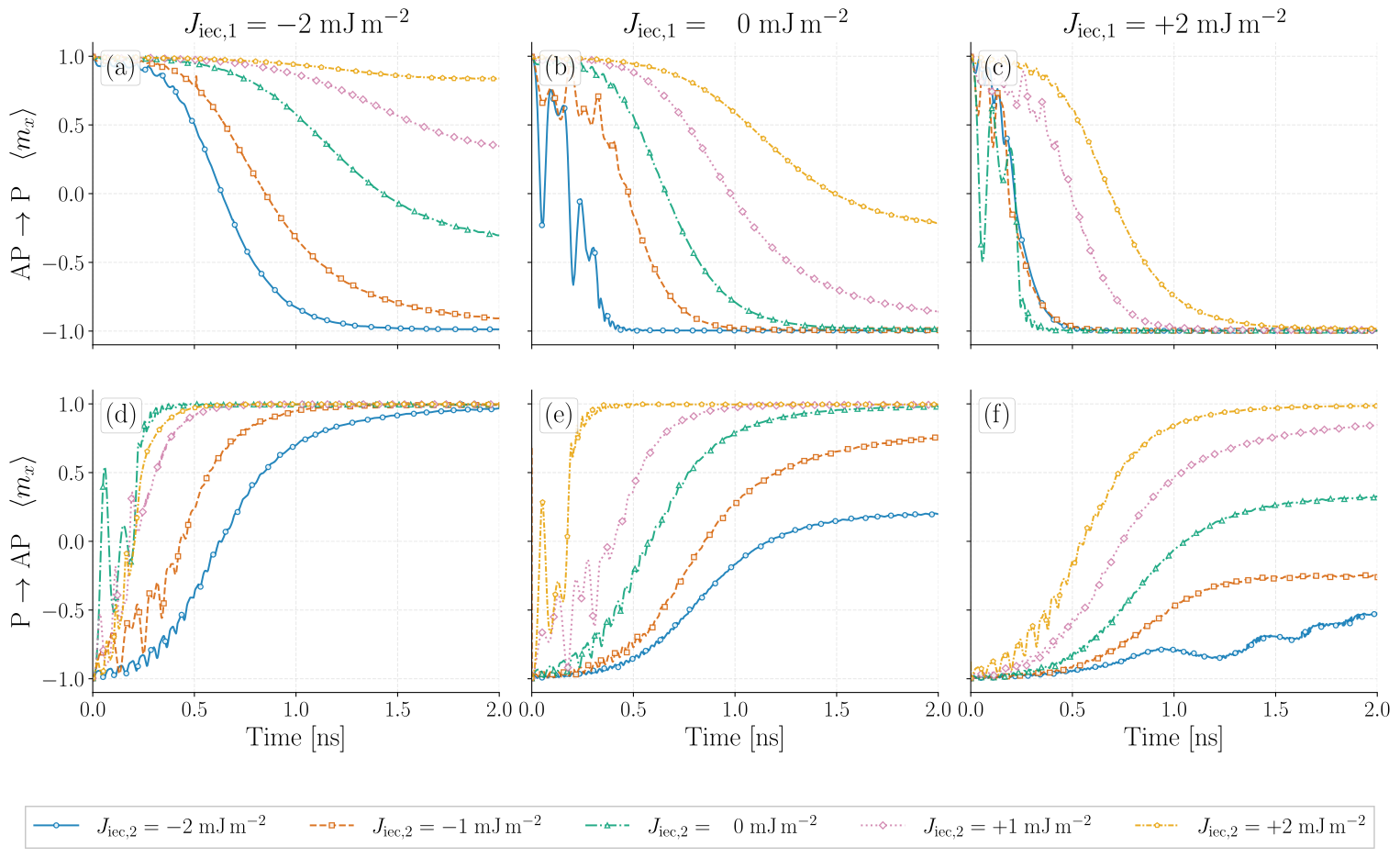
The IEC effective field (7.15) adds a contribution to the switching dynamics beyond the spin-transfer torques. A systematic parameter study varied
\(J_{\text {iec},1}\) (RL\(_1\)–FL coupling through the TB) and \(J_{\text {iec},2}\) (FL–RL\(_2\) coupling through the NMS) from \(-2\) to \(+2\) mJ/m2,
covering the experimentally observed range for CoFeB\(|\)MgO and CoFeB/Ru/CoFeB interfaces [204].
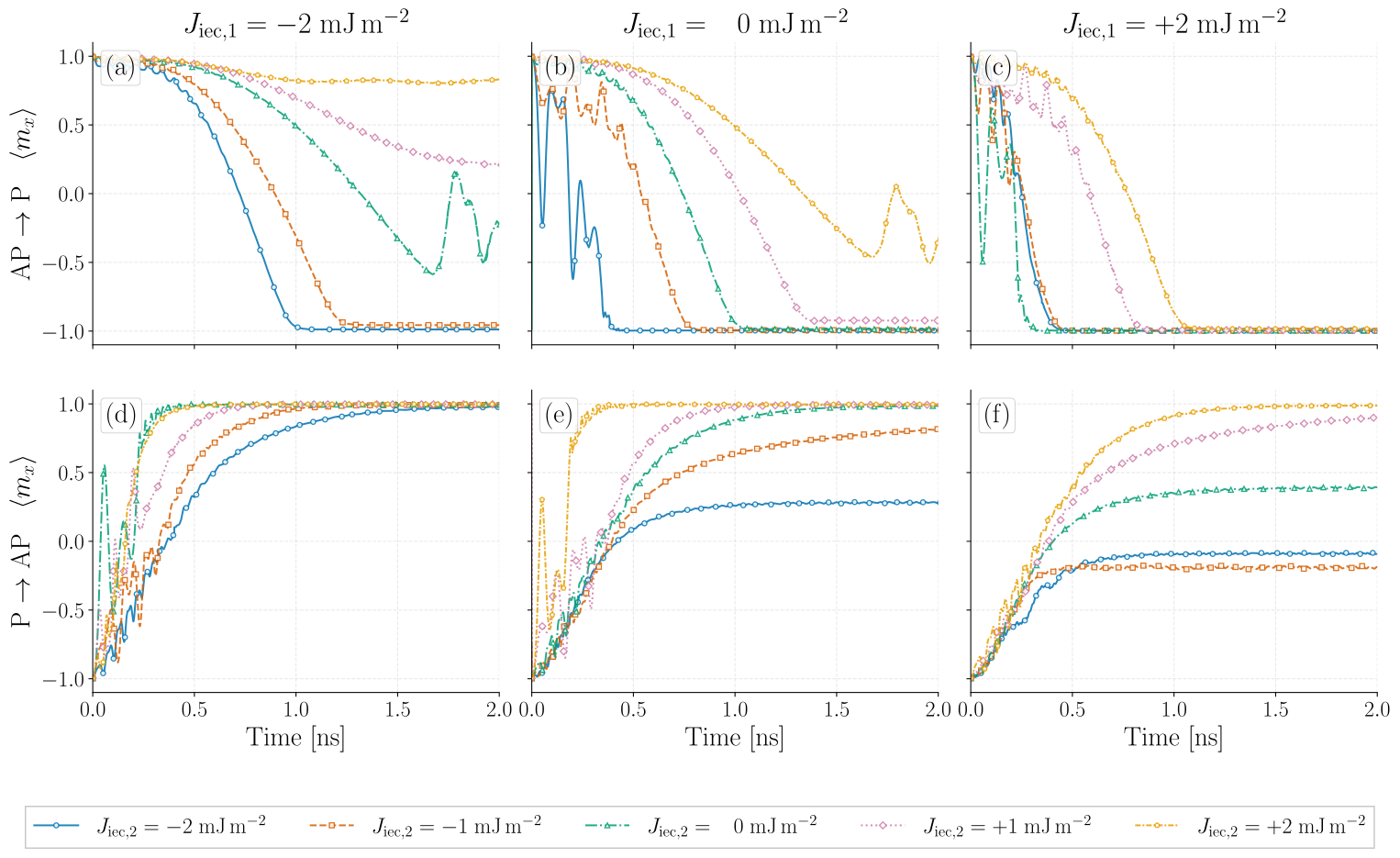
Figure 7.34: Influence of IEC on ds-MTJ switching dynamics with Ru-NMS, exploring a \(3 \times 5\) parameter matrix of AFM, zero, and FM coupling through TB\(_1\) (columns) with varying NMS coupling (curves
within each panel) for (a) AP\(\to \)P and (b) P\(\to \)AP transitions. Zero coupling (\(J_{\text {iec},1} = J_{\text {iec},2} = 0\)) generally yields the fastest switching, while strong coupling can introduce
energy landscape distortions that trap the magnetization in unintended states [218].
Figure 7.35: Influence of IEC on ds-MTJ switching dynamics with Ta-NMS, exploring a \(3 \times 5\) parameter matrix of AFM, zero, and FM coupling through TB\(_1\) (columns) with varying NMS coupling (curves
within each panel) for (a) AP\(\to \)P and (b) P\(\to \)AP transitions. Zero coupling (\(J_{\text {iec},1} = J_{\text {iec},2} = 0\)) generally yields the fastest switching, while strong coupling can introduce
energy landscape distortions that trap the magnetization in unintended states [218].
Figure 7.34 reveals four key trends: (1) zero coupling (\(J_{\text {iec},1} = J_{\text {iec},2} = 0\)) yields the fastest switching by eliminating IEC-induced
barriers [116], (2) FM coupling assists one transition direction but opposes the other, creating asymmetry: for RL\(_1\) in \(-\hat {x}\), positive \(J_{\text {iec},1}\) assists P\(\to \)AP but hinders AP\(\to
\)P, (3) AFM coupling produces the opposite asymmetry, favoring AP\(\to \)P over P\(\to \)AP, and (4) strong coupling can introduce writing errors by trapping the magnetization in unintended states when the
IEC-induced effective field competes with the spin-transfer torque and distorts the energy landscape.
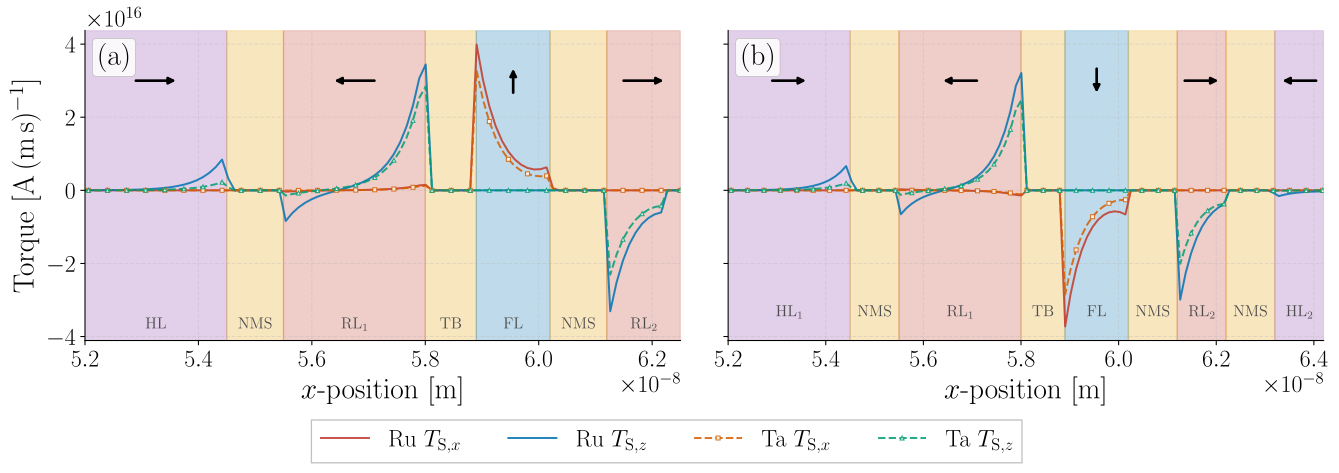
The torque distribution confirms the dual-torque mechanism: both RL\(_1\) (through the TB) and RL\(_2\) (through the NMS) contribute torque peaks at opposite FL interfaces that constructively add for the anti-parallel RL
configuration, with the RL\(_2\) peak larger for Ru than for Ta, consistent with the longer spin-flip length.
7.6.10 SAF-Enhanced Double Spin-Torque MTJ
The preceding subsections examined how metallic spacers and IEC affect the effective field and torque distributions within a single reference layer configuration. The natural extension combines the ds-MTJ concept from
Section 7.6.7, where dual reference layers generate cooperative torques, with SAF stabilization from Section 7.6.1, replacing one or both reference layers with SAF stacks. In this configuration, RL\(_1\) is replaced with a CoPt hard layer antiferromagnetically coupled through Ru,
while RL\(_2\) uses a CoFeB layer ferromagnetically coupled through Ta. The device geometry is 70nm diameter at 0.6V bias.
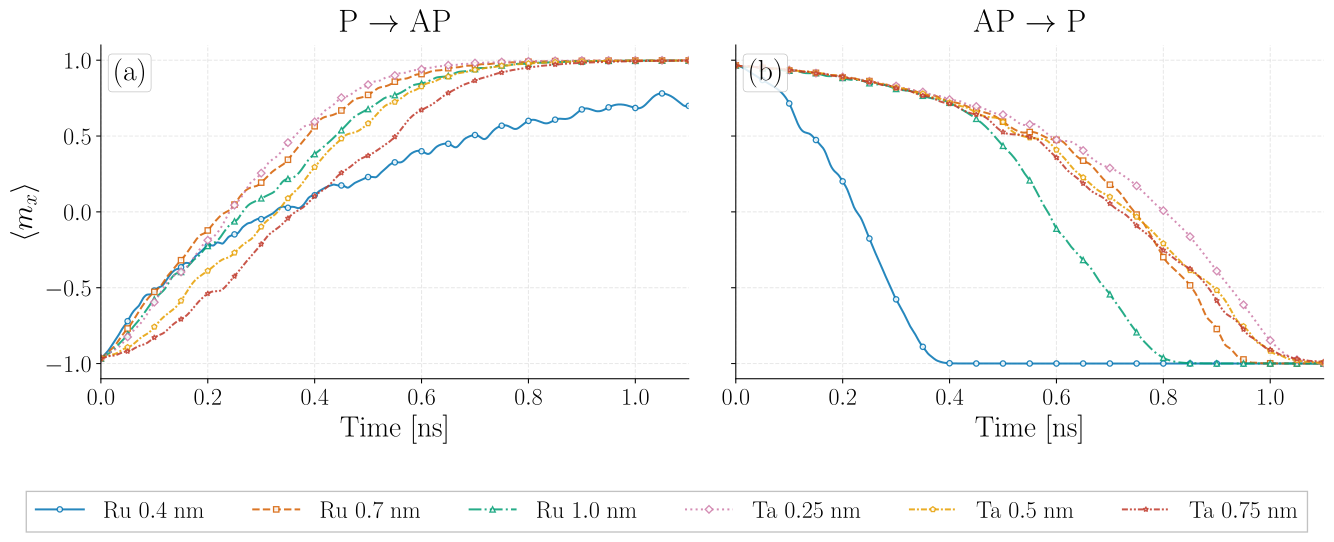
The NMS thickness determines the coupling strength and hence the switching behavior (Table 7.6). For the Ru spacer, 0.4nm produces excessively strong AFM coupling (\(J_{\text {iec}} = \SI {-2.1}{\milli \joule \per \meter \squared }\)), causing
oscillatory behavior, where the FL cannot settle into the AP state. At 0.7nm, coupling moderates and switching completes, though slowly. The
optimal Ru thickness is 1.0nm (\(J_{\text {iec}} = \SI {-0.65}{\milli \joule \per \meter \squared }\)), yielding clean
sub-nanosecond switching for both AP\(\to \)P and P\(\to \)AP transitions. For the Ta spacer, 0.25nm is optimal (\(J_{\text {iec}} =
\SI {0.4}{\milli \joule \per \meter \squared }\), FM), achieving the fastest switching among Ta thicknesses, while 0.5nm and 0.75nm produce progressively weaker coupling and slower switching.
Table 7.6: SAF-enhanced ds-MTJ spacer parameters and coupling values [217]. The optimal thickness for each spacer material is highlighted.
.
Spacer
Thickness
\(J_{\text {iec}}\) [mJ/m2]
Behavior
Ru
0.4nm
\(-2.1\) (AFM)
Oscillatory (too strong)
Ru
0.7nm
\(-1.0\) (AFM)
Slow switching
Ru
1.0nm
\(-0.65\) (AFM)
Optimal
Ta
0.25nm
\(+0.4\) (FM)
Optimal
Ta
0.5nm
\(+0.2\) (FM)
Slower switching
Ta
0.75nm
\(+0.1\) (FM)
Slowest switching
Figure 7.36: Switching trajectories for SAF-enhanced ds-MTJ structures comparing Ru and Ta NMS at varying thicknesses: (a) P\(\to \)AP and (b) AP\(\to \)P transitions. Optimal performance at Ru 1.0nm (\(J_{\text {iec}} = \SI {-0.65}{\milli \joule \per \meter \squared }\), AFM) and Ta 0.25nm (\(J_{\text {iec}} = \SI {0.4}{\milli \joule \per \meter \squared }\), FM). Ru at 0.4nm (\(\SI
{-2.1}{\milli \joule \per \meter \squared }\)) exhibits oscillatory behavior from excessively strong AFM coupling [217].
Figure 7.37: Spin-transfer torque distribution across the full multilayer stack for (a) single SAF ds-MTJ and (b) double SAF ds-MTJ, comparing Ru (AFM) and Ta (FM) NMS. The Ru spacer generates stronger
torques on RL\(_2\) due to its longer spin-flip length, while the double SAF configuration provides enhanced reference layer stability with minimal switching speed penalty [217].
The torque analysis (Figure 7.37) confirms that the double SAF configuration provides enhanced reference layer stability through additional pinning fields while maintaining
the cooperative dual torque mechanism essential for sub-nanosecond switching. The Ru spacer generates stronger RL\(_2\) torques due to its longer spin-flip length, consistent with the W vs Ta comparison in the hybrid FL analysis.
New physical insight.
The systematic investigation across four stack families reveals IEC as a versatile design parameter whose role evolves with device complexity. In ultra-scaled composite structures, weak FM coupling (\(\SI {0.01}{\milli \joule
\per \meter \squared }\)) suppresses back-hopping while preserving fast switching [116]. In SAF-enhanced structures, a quantitative threshold \(|J_{\text {iec}}| > \SI {1}{\milli \joule \per \meter
\squared }\) is required to prevent parasitic spin-torque-induced RL reversal during FL switching [215]. The hybrid FL with metallic spacers reveals that the spin-flip length of the NMS material is the fundamental
parameter controlling torque transmission between FL segments, with W (2.4nm) enabling systematically faster switching than Ta (1.9nm). The four-stage torque decomposition (Figure 7.31) shows that composite FL
structures introduce additional torque injection points at NMS interfaces, producing parasitic torques on the reference structure that scale with the spacer’s spin-flip length. In ds-MTJ structures, anti-parallel dual reference layers
with zero IEC generate cooperative torques that achieve a 2–3\(\times \) switching speed enhancement and sub-nanosecond operation with standard CoFeB\(|\)MgO materials [218]. The integration of SAF layers into
ds-MTJ structures (Figure 7.36) demonstrates that optimal NMS thickness balances coupling strength against spin transport efficiency: Ru at 1.0nm (\(\SI {-0.65}{\milli \joule \per \meter \squared }\) AFM) and Ta at 0.25nm (\(\SI {0.4}{\milli \joule \per \meter \squared }\) FM). This completes the IEC role progression established across the chapter: from modifier (back-hopping suppression,
Section 7.4) to controller (cyclic switching) to design parameter (ds-MTJ speed, Section 7.6.7) to
reliability threshold (Section 7.6.2) to engineering parameter (hybrid FL spacer selection and NMS thickness optimization).